IMG_0928b.jpg

Intersectional Peonies

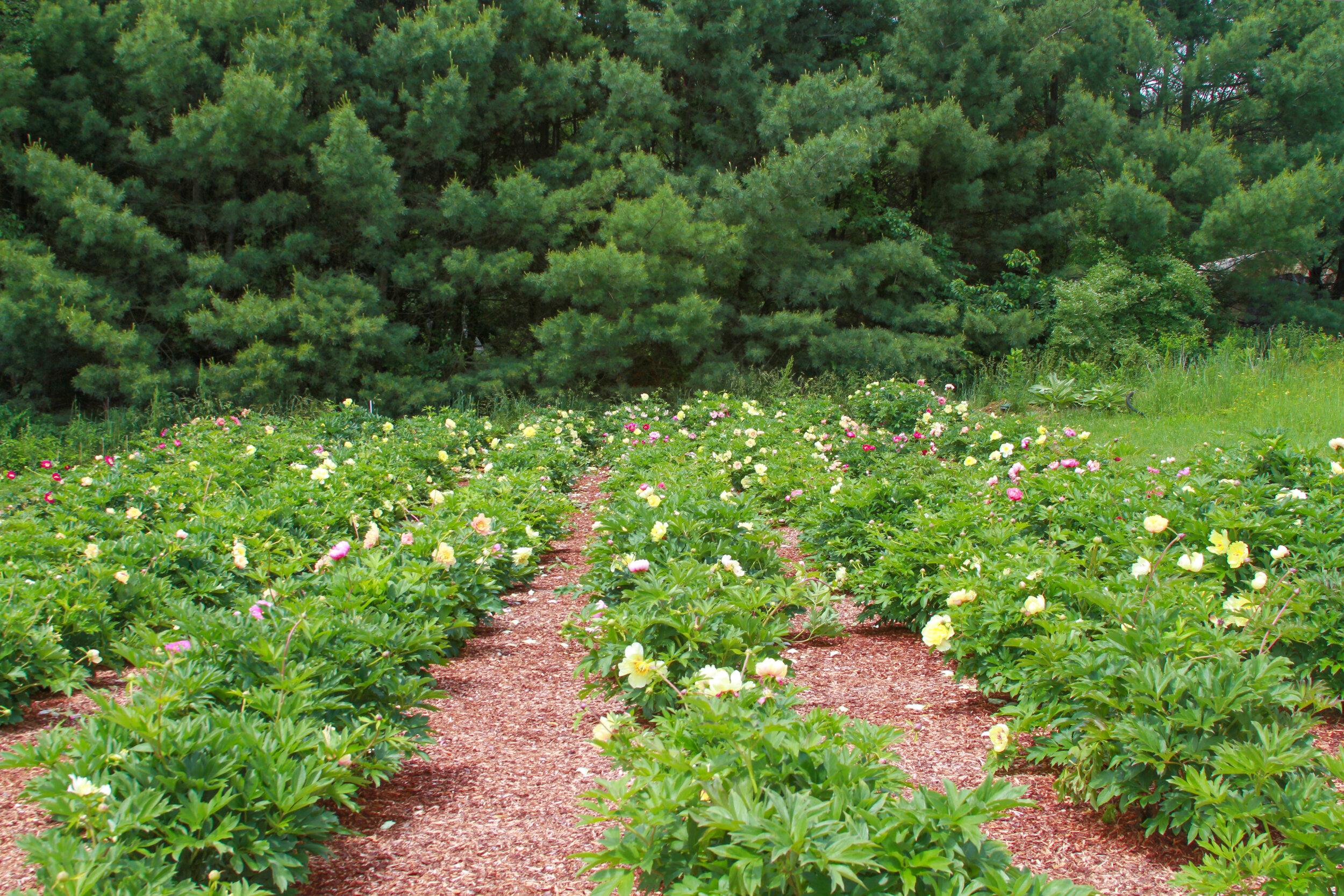
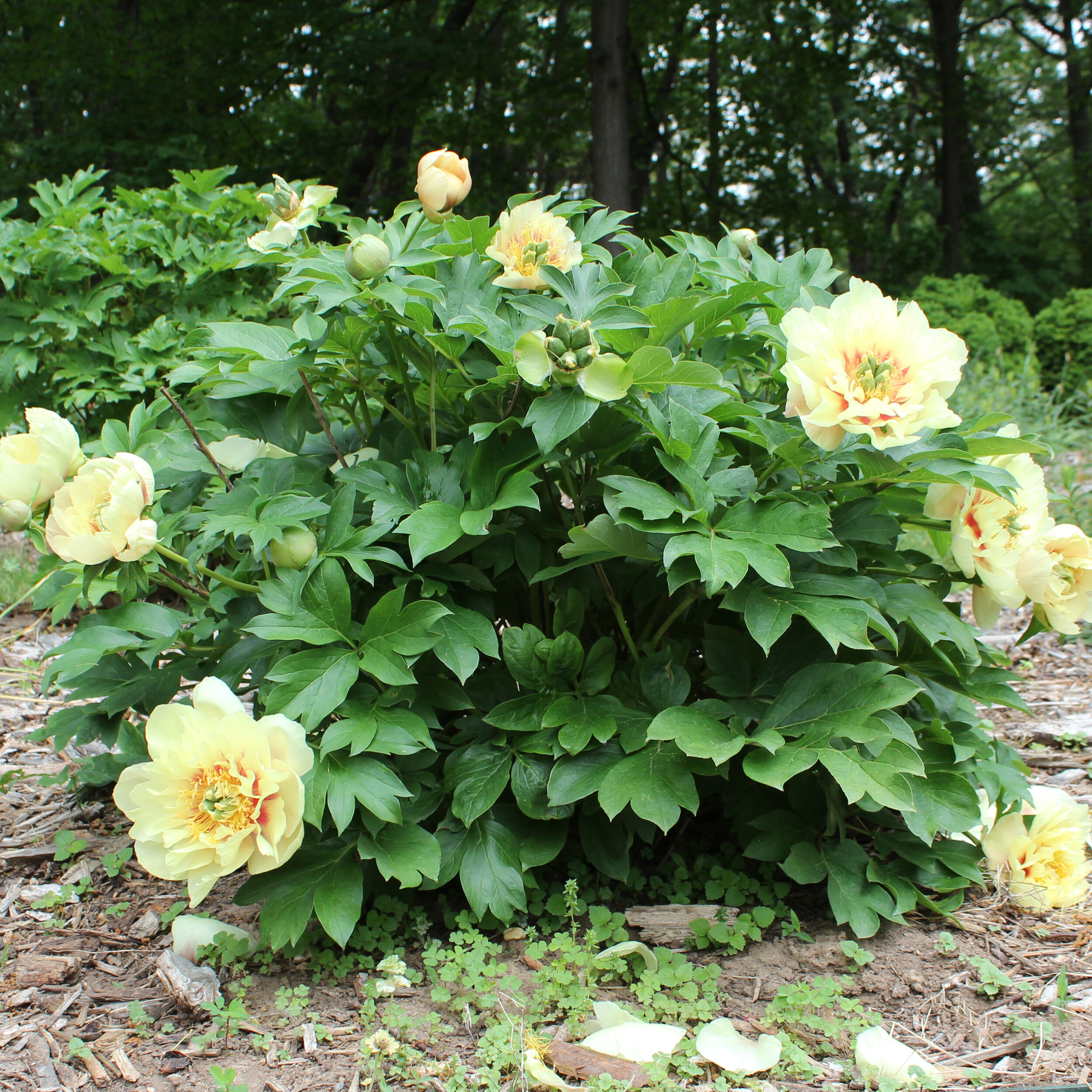
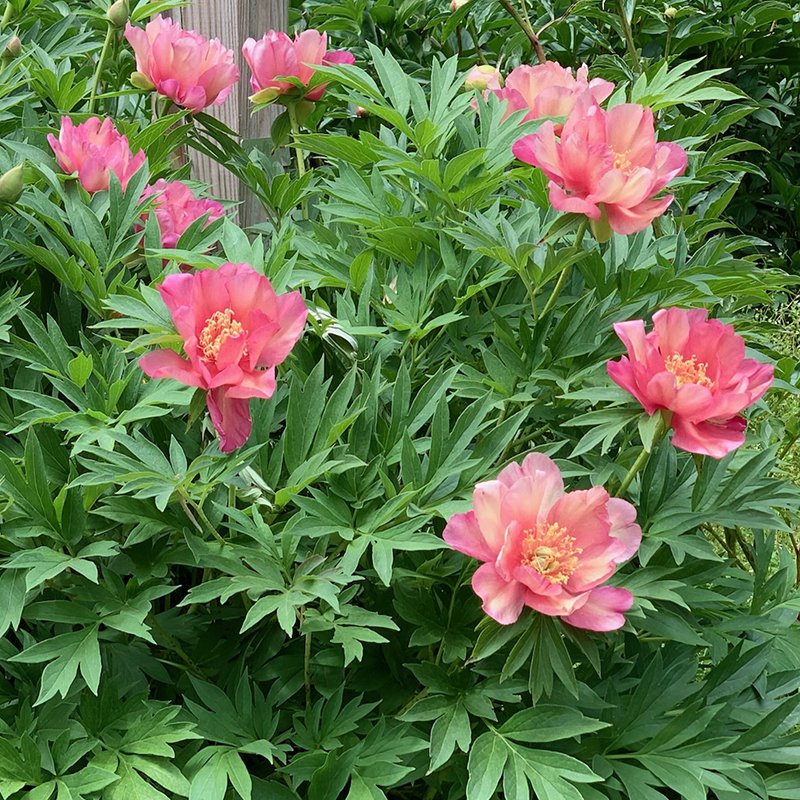
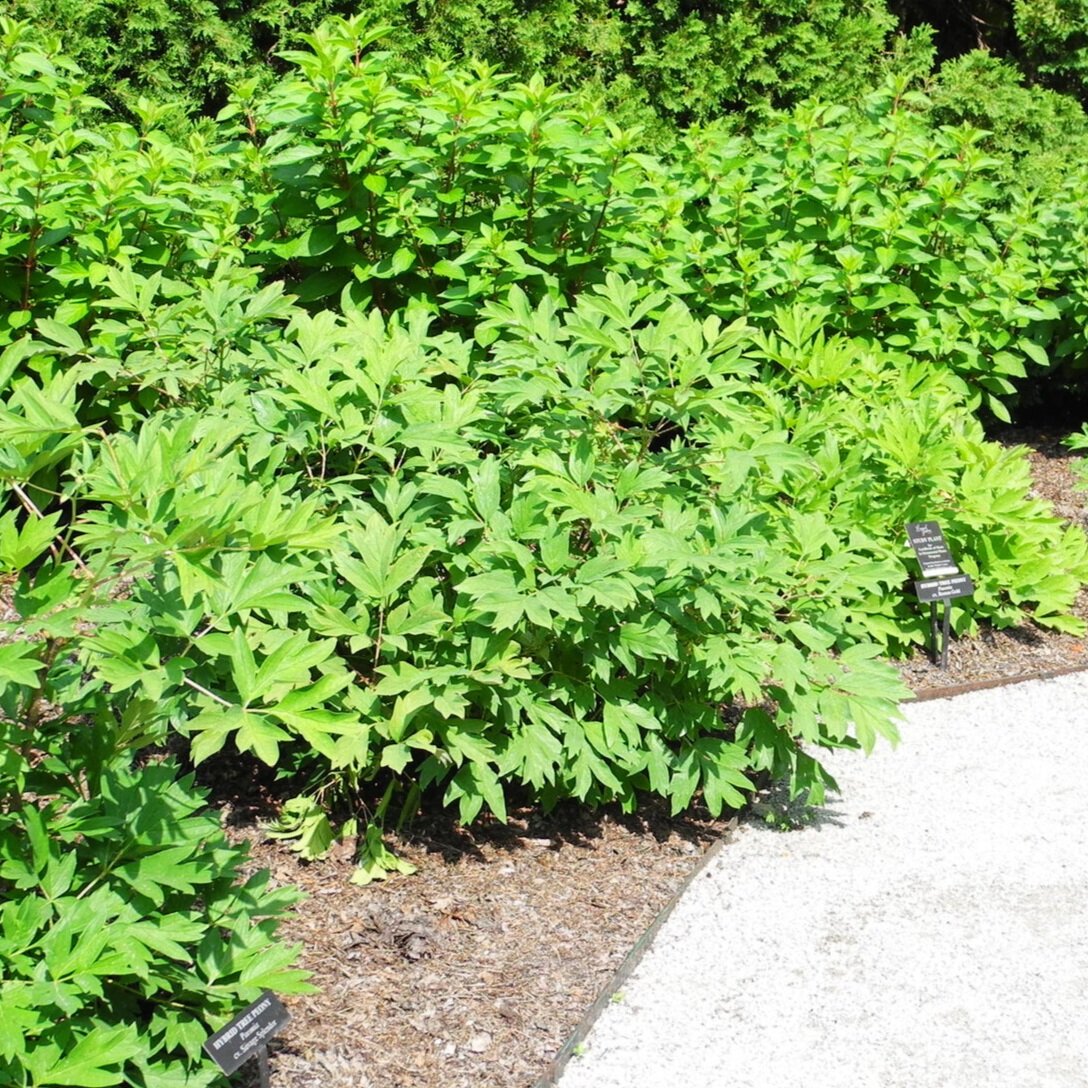
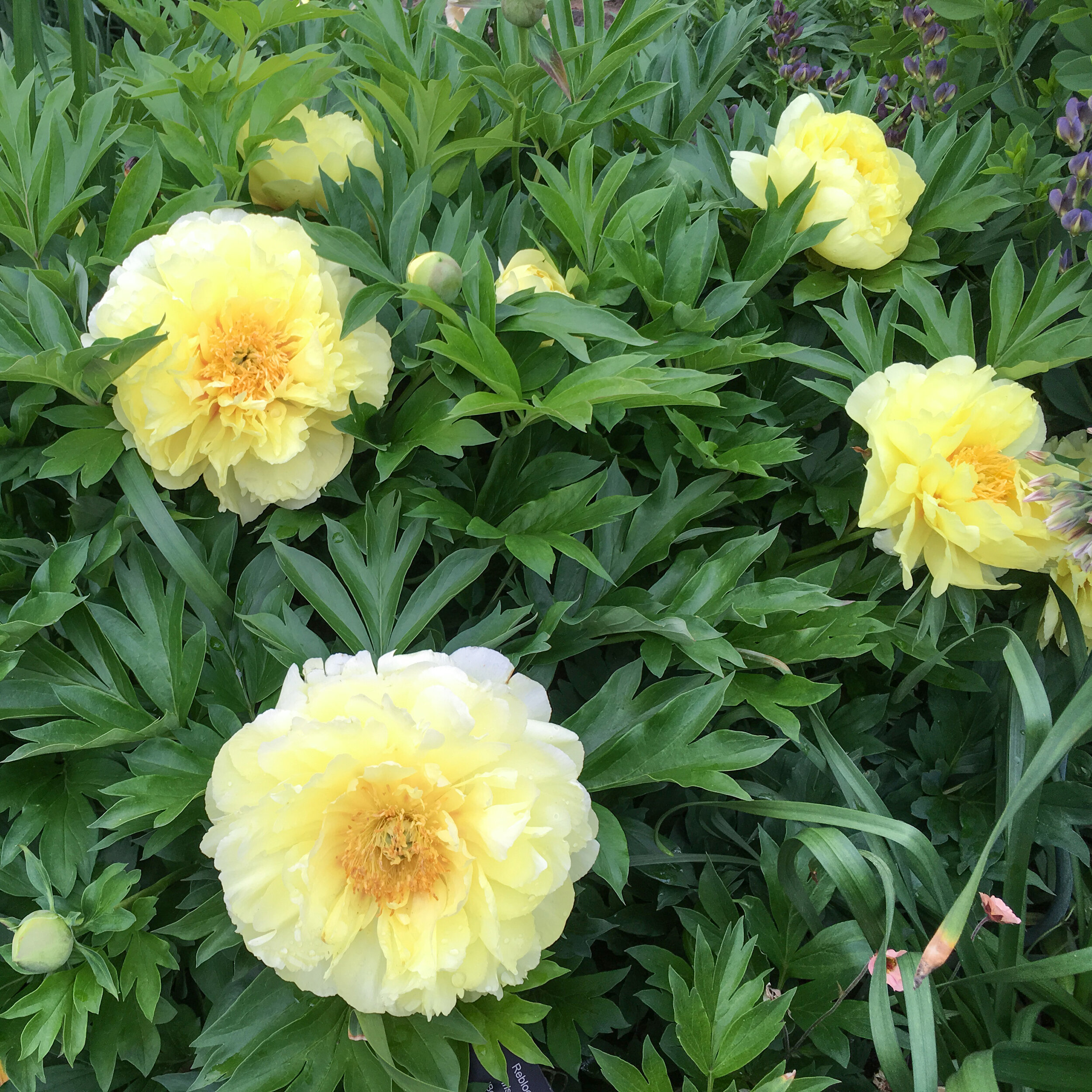
Intersectional Peonies, also known as Itoh Peonies, are hybrids created by crossing a tree peony and an herbaceous peony. At Peony’s Envy, we offer many varieties of intersectional peonies. These hybrids produce flowers and leaves reminiscent of the tree peony parent. However, the growth habits mimic the herbaceous parent, dying down to the ground in winter and reemerging green each spring. The plants produce some woody structure, but they remain low to the ground. Like their herbaceous parent, they prefer full sun, but grow well and produce a suitable number of flowers in dappled sunlight.

How Do You Design, Plant, and Care for Intersectional Peonies?

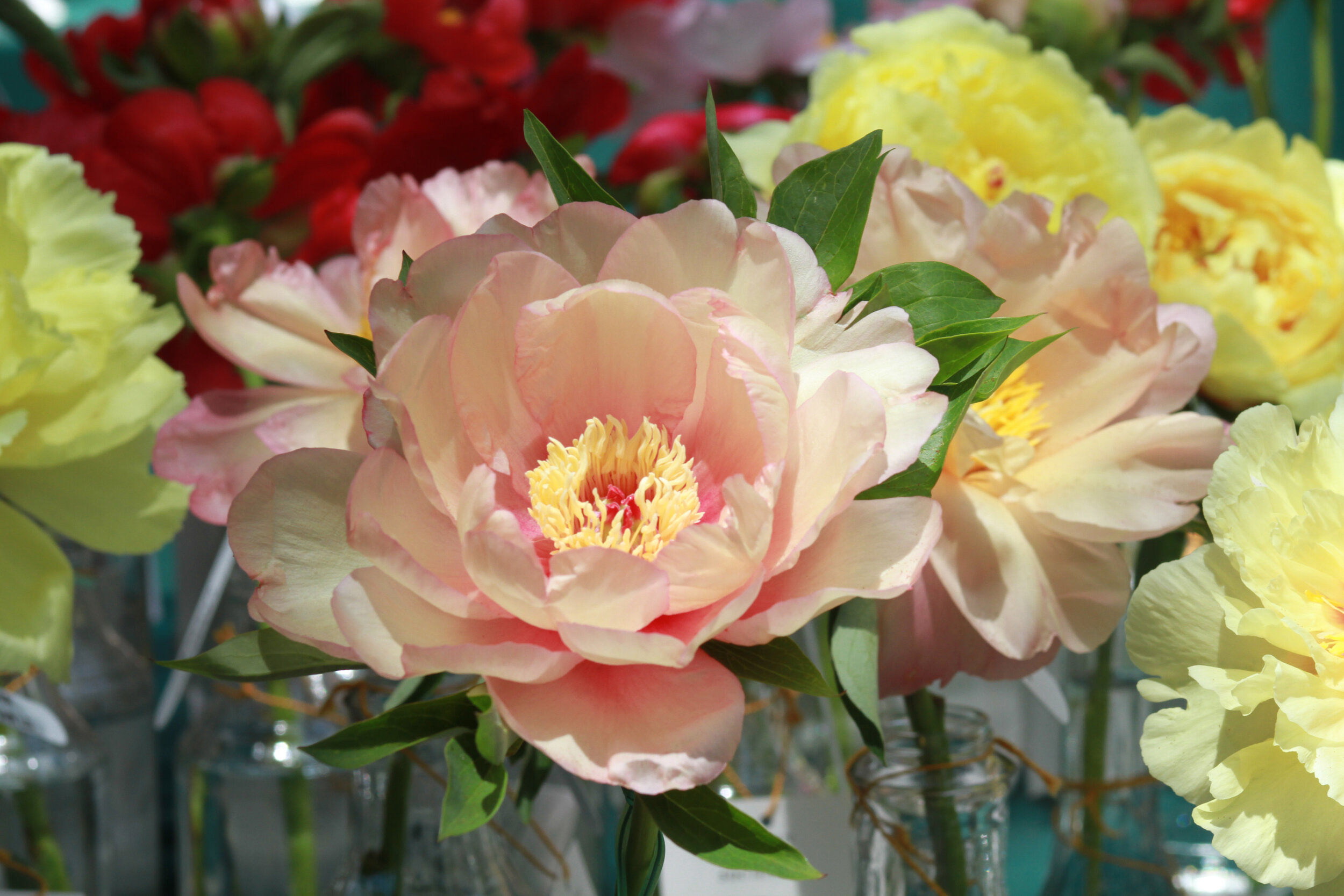
A mature intersectional peony will produce 50 or more dinner-plate-sized flowers on strong, short stems that do not require staking. They reach peak bloom near the end of the herbaceous peony bloom. Each plant can remain in bloom for 3-4 weeks, with new buds continually opening over this period. They can be used as cut flowers and offer a wide array of yellows and golds, colors not commonly available in herbaceous peonies. Intersectional peonies, on average, grow to approximately 2.5 feet tall. Their compact form is well-suited to the front of the perennial border. They grow in zones 3-9. Lovely large flowers, available in a unique yellow-bronze colorway, nicely shaped plant, no staking required. Our Intersectional Peony 2026 Spring Catalog is now available. Looking for information on other types of peonies? We have in-depth guides on the care and handling of the:

Jump to a Section:
Looking for information on other types of peonies: Herbaceous Peony Care | Tree Peony Care | Woodland Peony Care


1. Site Selection

IMG_2138b_sq.jpg
  • Full Sun
  • Hort Zones 3-9
  • Good Drainage
  • Rich Soil
  • Neutral pH

Intersectional peonies grow well in zones 3-9. Unsure of your horticultural zone? Click here to go to the USDA website, where you can enter your zip code to determine your zone. When choosing a site, first consider the amount of sun. The more sun, the more flowers the peony will produce. If planted in less than full sun, it will take longer to mature and won’t produce as many flowers. Second, peonies need rich soil, good drainage, and a neutral pH. You are looking to create a sandy loam: soil with equal parts sand, clay, and compost. They cannot tolerate wet feet. Do not plant in low-lying areas that retain water, and be cautious when planting close to automatic sprinkler or irrigation systems.


2. Garden Layout

Intersectional itoh peony planting spacing

New intersectional peony plants should be planted 3 to 4 feet apart on center, and approximately 1.5 feet from any edge or border. Once you have determined the site, measure the space you have available. If you are planting one plant, then your calculations are simple; if you are designing a larger garden, scroll down for our recommendations. Think long-term when you are laying out your peony garden; they will take about three years to mature, and will live happily with minimal care for decades.

Intersectional Low Hedge

Spacing for a row of intersectional itoh peonies

Pair with Herbaceous

inter_spacing2.jpg

When using intersectional peonies with herbaceous peonies, place the intersectional peonies in front. This is a great way to extend your peony bloom as the intersectional peonies will continue to flower after your herbaceous peonies have faded.

Rows of intersectional itoh peonies

3. When to Plant

IMG_2055_l.jpg

Tips for Fall

Fall planting occurs from late August until the ground freezes solid for winter. As with all cold-hardy plants, fall is the traditional time to plant, and historically, the only time peony roots were available. Thus, typically, peonies are shipped bare root in the fall. They are freshly dug and should be planted immediately.

  • PEONIES ARE COLD-HARDY PERENNIALS. They should be planted the first chance you can get a shovel in the ground, regardless of frost or freeze potential. Do not wait for the frost date to plant your peony roots.
  • PLANT THEM AS SOON AS POSSIBLE. Utilize the day or so between cold periods, when the ground is thawed enough to dig. New peonies are susceptible to frost heaving; any peonies heaved out of the ground should be put back to their original location. If it is too frozen to do so, they can be covered in place with soil until the ground thaws or taken in and placed in peat moss in the refrigerator until the ground thaws enough to dig. Do not mulch your peonies; they need the cold to flower in the spring, and mulch will insulate peonies from the cold.
index2_18_14b.jpg

Tips for Winter

Winter planting occurs from the time the ground freezes solid until the time the ground starts to thaw. Follow the same instructions for winter planting as you would for fall planting. Here are some additional tips for the winter months:

  • IF THE GROUND IS FROZEN SOLID at the time of purchase or delivery, it is best to store your peony roots in the fridge until you are ready to plant. Keep them in the bag as they come, do not add water.
  • PEONIES ARE COLD-HARDY PERENNIALS. Plant them the first day that the ground has thawed enough to get a shovel in the ground. Do not worry if the ground has the potential to freeze again, or if it will snow.
  • IF YOUR PEONIES HAVE SPROUTED, plant as above. Make sure to protect new shoots from frost, as they are more susceptible to frost damage if not planted the correct distance underground.

Tips for Spring

Spring planting occurs from the time the ground starts to thaw through mid-June.

  • PEONIES ARE COLD-HARDY PERENNIALS. They should be planted the first chance you can get a shovel in the ground, regardless of frost or freeze potential. Do not wait for the frost date to plant your peony roots. It is best to plant them while you still have cold or snowy days in the forecast.
  • IF THE GROUND IS FROZEN SOLID at the time of purchase or delivery, it is best to store your peony roots in the fridge. Plant them the first day that the ground is soft enough to dig, regardless of future temperatures. Keep them in the bag as they arrive; do not add water.
  • If you are planting bare-root peonies in spring, it is likely that your peonies will produce minimal growth above ground the first year. If you are planting peonies that have been grown in pots, there is potential that the buds will wither and the leaves will die back early. Don’t worry, this is normal. That said, diseases are more prevalent on peonies that have been planted in spring. Watch for botrytis and treat accordingly.
  • There is an old adage when planting perennials: "First year roots, second year shoots, third year flowers." Getting your peonies in in the spring gets a jump on things, giving your plant a good first spring of root development. Next year you are likely to have a reasonably sized peony with the potential of a flower or two.

4. How to Plant


New intersectional peony plants should be planted 3 to 4 feet apart on center, and approximately 1.5 feet from any edge. To plant, start by digging a hole one foot deep and one and a half feet in diameter. Amend your soil, as mentioned below.

 
Correct planting depth for intersectional peonies
 

Plant so that 0.5 to 2 inches of soil cover the top of the root. Peonies should be planted deeper in colder zones and shallower in warmer zones. For example, zones 7-8 will plant peonies at 0.5 inches, zones 5-6 will plant at 1 inch, and zones 2-4 will plant at 2 inches below the surface of the soil. Planted too deeply, flowers will not develop; too shallowly, and the tops of the eyes will freeze, dry out, and die. Press down on the soil to remove air pockets around the root, and lift the root as necessary to ensure proper depth. Water in well, then again ensure proper depth. During the first growing season after planting, ensure that your peony gets a good soaking every two to three weeks. In order to thrive in your garden, it must get this thorough soaking. Without it, the peony’s fibrous roots will not establish themselves, and it won’t be able to absorb proper nutrients. Typically, rain is enough; however, in times of drought, in exceptionally hot weather, or if your peonies are planted in sandy soils, consider watering more frequently. Avoid overwatering, as too much water will invite both root rot and disease. We do not recommend planting peonies near automated watering systems.

Peonies in Pots

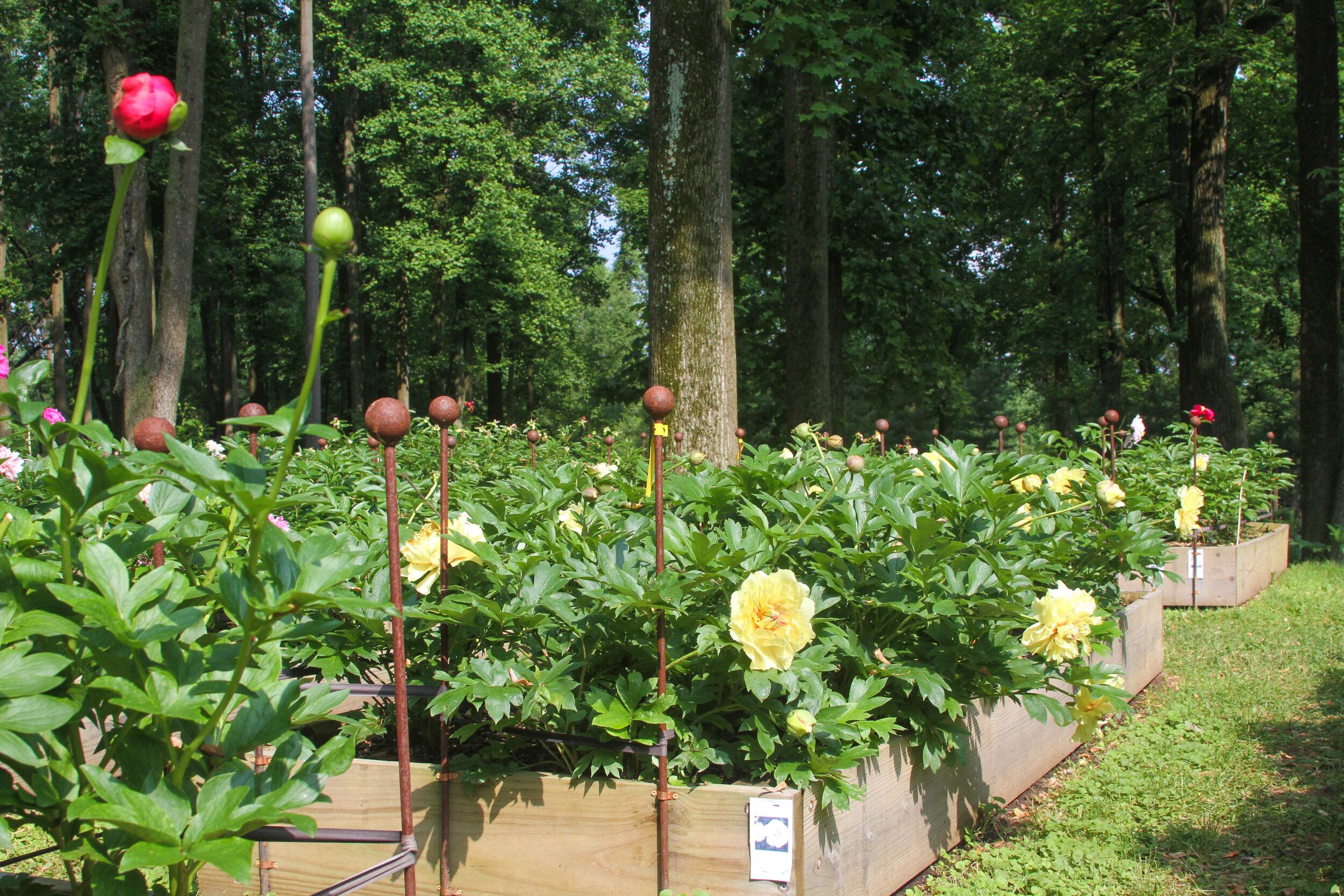
We do not recommend planting peonies in pots. They do best when planted in the ground. Peonies are long-term perennials that will live for generations. If you don’t have any space directly in the ground, peonies can be successfully grown in raised beds. Drainage is the key to planting in any situation, especially raised beds. We grow peonies in beds that are 12 feet long by 4 feet wide by 1 foot deep. We line the boxes with landscape fabric and fill them with potting soil amended with compost, worm castings, and crushed limestone or granite. The beds are placed on the existing soil for optimal drainage. If you have lots of experience growing other long-term perennials in pots, you may also have success with peonies, but it is risky. Make sure your pot is large, more like a planter, and is at least 5 gallons in size; the bigger the pot, the better. Commercial potting mixes are available; we have yet to find one that we really like. Look for those with extra porosity. Remember that your peony may need to be staked and that it will take several years to reach full size. Containers will need to remain outside in the winter as peonies need the cold season to flower (do not bring them inside or store them in a warm greenhouse). Be sure that your pots do not continually fill with water, as this will cause peonies to rot. Peonies are especially susceptible in winter when the bottom of the pot can freeze and prohibit drainage if the weather switches to rain. This factor is easier to mitigate in warmer climates that get fewer extreme freeze-thaw cycles. We also do not recommend having peonies in pots for a few seasons and then moving them to the ground. Peonies should be planted originally in their permanent location. Moving them will cause undue stress to the plant.

Amend the Soil

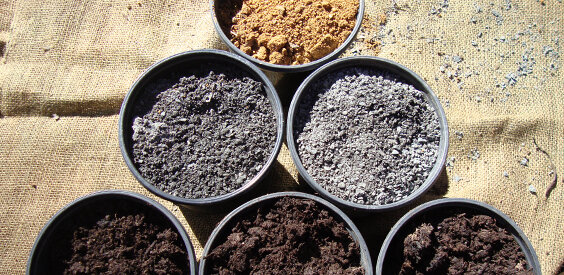
As your peony prefers to be planted and left in one location, it is worth taking the time to prepare the soil. Soil prep matters! When planting new gardens, it is best to get your soil tested. Here is a link to the Rutgers site that we use in NJ. If you are in another state, please refer to your agricultural extension office for help. You are looking to create a friable loam: a soft, rich, loose soil made of clay, sand, and compost. Peonies prefer a neutral pH of 6.5-7. Most often, you are looking to raise the pH. You can do this by adding lime and/or wood ash. Ask your agricultural extension for help. Generally, most dirt is sand and clay. Be prepared to add compost. Sandy soils drain well but leech nutrients; heavy clay soils drain poorly but retain nutrients. Compost will help both increase drainage and retain moisture while providing nutrition. In very sandy soil, top dress quarterly with a thin layer of compost, as nutrients will leech through the soil quickly. Heavy clay soils often have drainage issues; while they will hold onto nutrients longer, they will also retain water. It is therefore essential to improve drainage by adding compost and Greensand (or sand/rock dust) before planting. Additionally, top dressing with compost is recommended.

DSC01743b.jpg

Preparing a bed

With soil amendments in mind, you have the options to dig individual holes or prepare an entire bed. Both require the soil to be amended to a depth of one foot. In all cases, after planting, get in the habit of lightly top dressing with compost at least once a year (more often if the soil in your area is particularly sandy).


5. Growth Expectations

 The graphics below show growth expectations for intersectional peonies. Although rare, it is possible that an intersectional peony will not produce growth above ground the first spring. Peonies are very resilient and hardy, but do take time to establish and become a mature flowering plant. Intersectional peonies will mature to 3-4 feet wide, with more flowers and more stems being produced each year. The height of your peony depends on the cultivar.

Intersectional Itoh Peony Growth Expectations

6. Choosing Intersectional Cultivars

There are only a few intersectional peonies from which to choose due to their relatively new creation. Thus, the choice of cultivar is determined largely by color. It should be noted that intersectional peonies have great leaf coverage from the base to the top of the plant and make excellent accent plants as well as function well at the front of a garden border.

Intersectional Itoh Peony Color
Intersectional Itoh Peony Height
IMG_0085.JPG

7. Growing Intersectional Peonies in the South

Intersectional peonies can tolerate more heat than herbaceous peonies and can grow all the way south to Horticultural Zone 9! No additional care is recommended or required for these types of peonies in zones 7 through 9.


8. Intersectional Peony Routine Maintenance

SPRING

  • Garden Cleanup
  • Watch for Spring Frosts
  • Feed as Shoots Emerge
  • Deadhead During and After the Bloom
  • Water When Necessary
  • Weed Around Peonies

SUMMER

  • Feed After the Bloom
  • Water When Necessary
  • Weed Around Peonies
  • Watch for Disease

FALL

  • Water When Necessary
  • Remove the Leaves in Fall
  • Feed Before Winter

Garden Cleanup

  • Clean up the area around your peonies to increase air flow and reduce competition from weeds and weed seeds (see below for details on weeding).
  • Add compost and other soil amendments at the drip line to nourish your peonies (see below for details on feeding)
  • Check the planting depth of your peonies. The crowns should remain 0.5 to 2 inches below the surface of the soil, depending on your horticultural zone (see above for details on planting depth).
  • It is best to cut back your intersectional peonies in the fall (see below for details), but if you missed doing this, be sure to remove the old, dead stems in the spring before new shoots emerge.
  • If your peonies had diseases last year, treat them in the spring to prevent reinfection.

Spring Frosts

Peonies are incredibly cold-hardy plants. It is rare that light frost will damage plants or flower buds. More severe and prolonged frosts (multiple nights and temperatures in the teens) may damage buds and hurt the plants for the season. If you anticipate a hard or prolonged frost after your peonies have sprouted, you can protect your plants by covering them. Make sure the covering does not touch the plants, or you will do more harm than good. Do not touch your peonies when they are frozen, as this will cause them to break. Wait until after they have warmed back up. That being said, growing commercially, we don’t have the option to protect our plants from frost. We have acres of peonies, and in our experience, frost damage is rare.

Staking

Unlike herbaceous peonies, intersectional peonies don’t require staking or support.

Deadheading Peonies

2017-05-06 09.33.54b.jpg

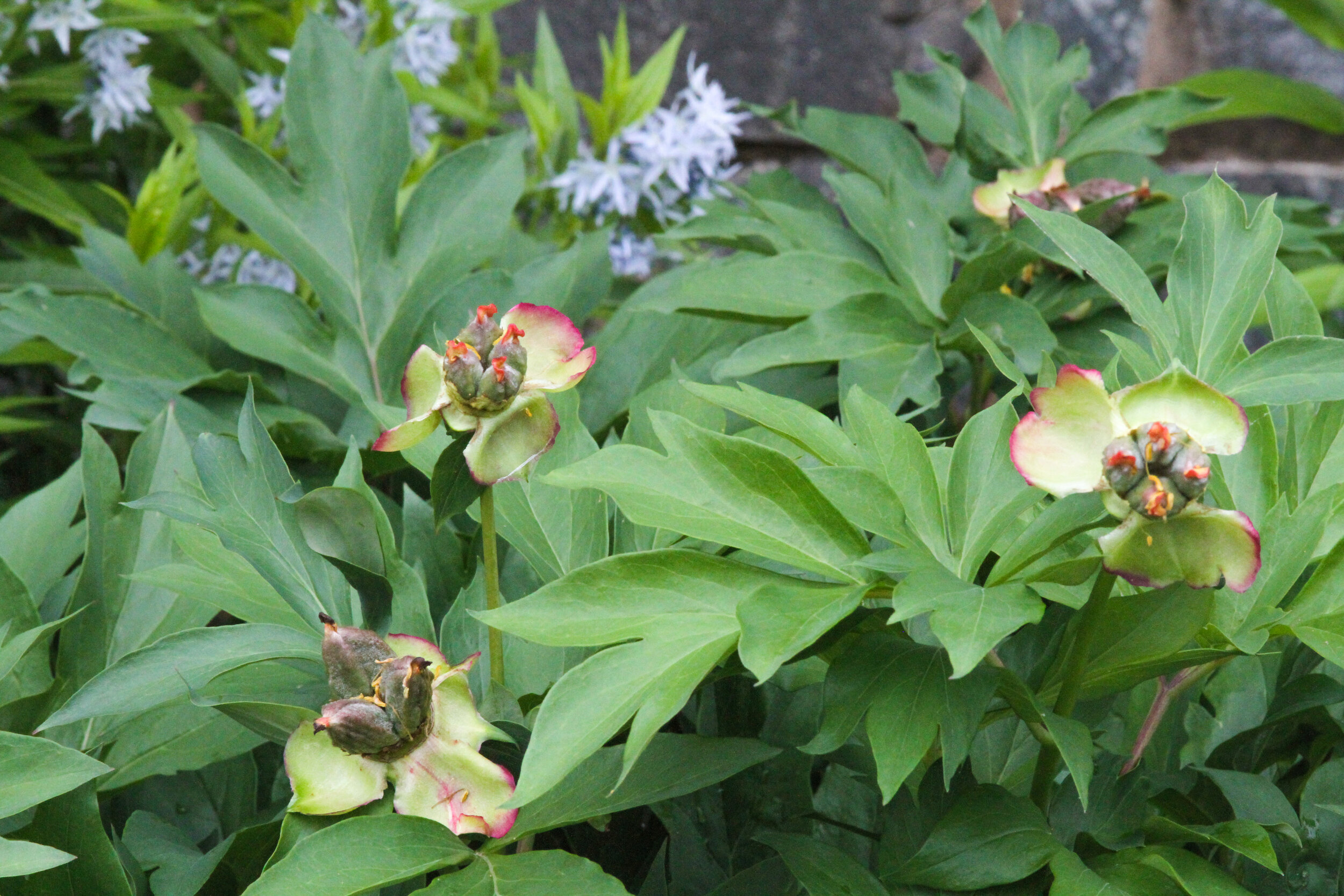
Intersectional peonies will bloom in waves. Remove the spent flowers as the bloom progresses. Be careful not to remove any new flower buds. Plants will not produce viable seeds, so there is no need to keep them. It is best to focus the plant's energy on leaf and root development.

Feed Peonies

Planted in full sun with rich soil and great drainage, intersectional peonies can thrive almost entirely on their own as the nutrient cycle is self-sustaining. Nonetheless, a little food will help keep your peonies healthy and floriferous. Feed lightly three times a year, in the fall when you clean up your garden and prepare plants for winter, in early spring just as shoots emerge, and again in early summer after plants have bloomed.

  • Compost: We primarily use locally-sourced compost, Neptune’s Harvest Fish and Seaweed Emulsion, and OMRI-certified worm castings. When applying compost, thin layers are better than thick, and remember to apply at the drip line and not over the center of the plant, since applying on the root will bury the plant too deeply and eventually prevent flowering. For large-scale projects in the area, we recommend Full Circle Mushroom Compost.
  • Foliar Feeds: Plants absorb nutrients more efficiently through their leaf surfaces than through their roots. Liquid fertilizers, such as Neptune's Harvest Fish and Seaweed Fertilizer or Nature’s Source plant food, can be used to foliar feed during critical growing times. We recommend foliar feeding in early spring when peonies are setting buds.
  • Worm Castings: When first planting, when planting in pots, or to reinvigorate a garden after long-term neglect, we recommend using worm castings as an extra boost. It is garden gold, and a little goes a long way. As an added bonus, peonies love their high pH.

If you choose to use synthetic or partially synthetic fertilizers, choose one that is well-balanced and releases nutrients at a slow rate. A 10-10-10 fertilizer is best for spring and summer, and a 5-10-10 is best for fall. Rarely do we use synthetic fertilizers at our farm.

Watering Peonies

With the more frequent droughts, we have adjusted our tips on watering. Peonies like heavy infrequent soakings; when irrigation is necessary, consider drip lines instead of overhead sprinkler systems. During the first growing season after planting a new peony, ensure it gets a good soaking once a week. Weekly soakings keep the plant from being stressed by drought as it develops its fibrous root system. However, remember that peonies do not like wet feet, and be careful not to overwater. Watering daily or use of foliar sprinkler systems can cause rot. It is vital that your peony be planted in well-draining soil so that the water does not pool around the plant. Established peonies require less supplemental watering but still benefit from heavy infrequent soakings, especially in times of drought.

Do not mulch your intersectional peonies! Mulch will bury the crown of the peony too deeply and eventually cause it not to flower. In transitioning away from using mulch, remember that light layers of compost applied regularly around the drip line of your peonies (again, not on the crown) will feed your garden and can also help suppress weeds.

Instead, weed around your peonies. The shade from mature peonies will act as a weed suppressant from late spring to late fall. The first application of compost in early spring helps combat weed growth. After applying this first thin layer of compost, remove any weeds before they seed—this will ensure they do not spread throughout the year.

We often recommend under-planting your peonies with small spring bulbs, like miniature daffodils and crocus. They bloom before peonies, don't compete with them, and provide a nice early summer groundcover that reduces weeds. Be careful not to plant anything larger or that is particularly invasive around your peonies, or anything that will compete with your peonies and cause them to suffer.

Do not use any pesticides or weed suppressants anywhere close to your peonies! We have had several customers contact us with dead plants only to find out after laboratory testing that the runoff from their lawns, that had been sprayed with weed suppressants, killed their plants.

Weeding: Do Not Add Mulch or Use Weed Suppressants

Do not mulch your intersectional peonies! Mulch will bury the crown of the peony too deeply and eventually cause it not to flower. In transitioning away from using mulch, remember that light layers of compost applied regularly around the drip line of your peonies (again, not on the crown) will feed your garden and can also help suppress weeds. Instead, weed around your peonies. The shade from mature peonies will act as a weed suppressant from late spring to late fall. The first application of compost in early spring helps combat weed growth. After applying this first thin layer of compost, remove any weeds before they seed. This will ensure they do not spread throughout the year. We often recommend under-planting your peonies with small spring bulbs, like miniature daffodils and crocus. They bloom before peonies, don't compete with them, and provide a nice early summer groundcover that reduces weeds. Be careful not to plant anything larger or that is particularly invasive around your peonies, or anything that will compete with your peonies and cause them to suffer. Do not use any pesticides or weed suppressants anywhere close to your peonies! We have had several customers contact us with dead plants, only to find out after laboratory testing that the runoff from their lawns, which had been sprayed with weed suppressants, killed their plants.

Remove the Leaves in the Fall

Typically, you cut back your itoh/intersectional peonies so they are four to five inches above the ground. Before you cut, look for buds on the stems that may be forming - only certain varieties of intersectional peonies have them. If your intersectional peonies have side buds, cut to a consistent height above these buds. This will preserve more of the flowers while also sustaining a symmetrical plant. Again, leaves should not be composted in your home garden compost because it typically does not get hot enough to kill fungal spores and bacteria that may be on your peony leaves.


9. Cut Flowers

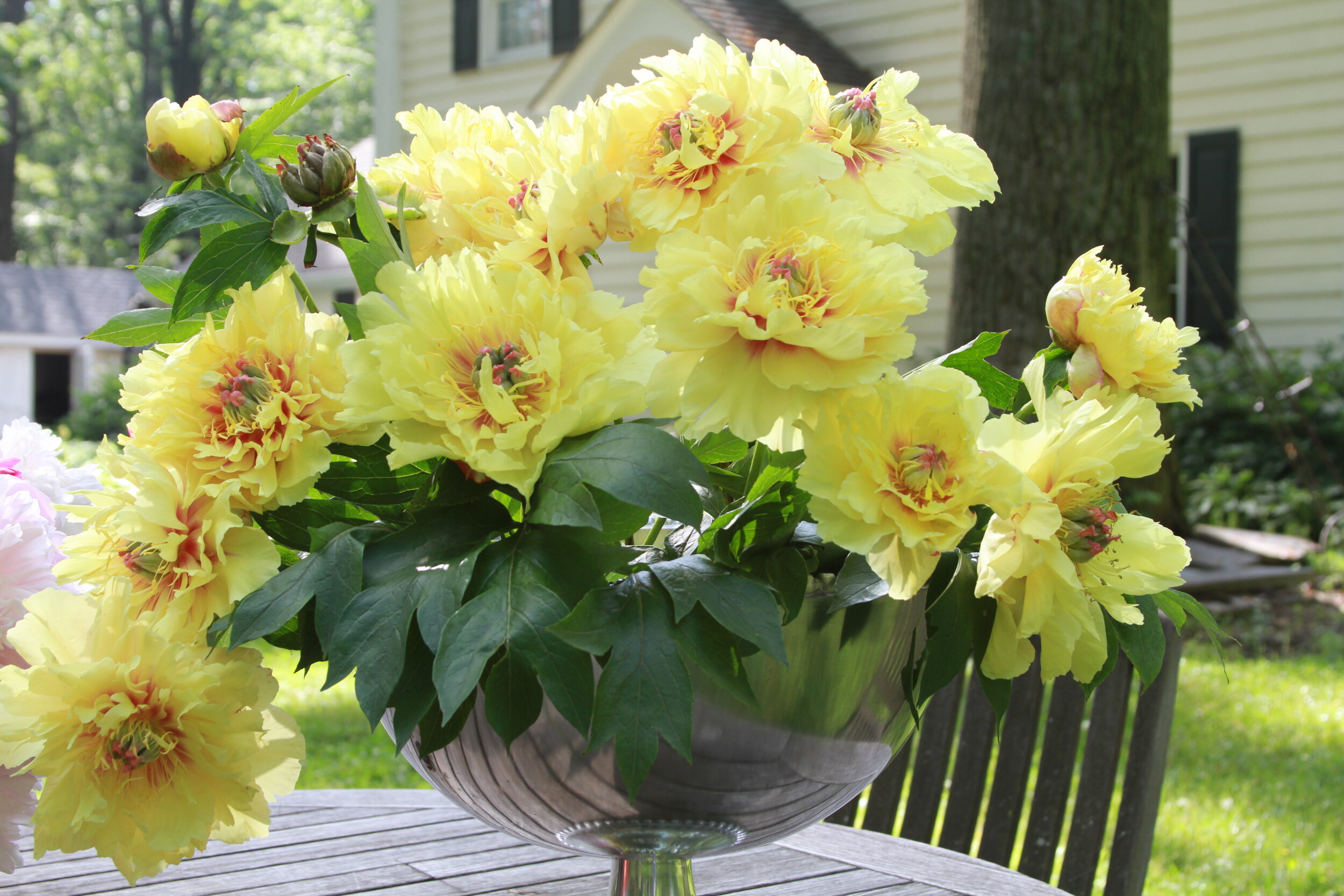
Intersectional peonies have flowers that look like their tree peony parent but have longer stems, like their herbaceous parent. Be careful when cutting the stem, as it is important not to cut the woody portion of the plant that will remain above ground. It is also important not to take more than a third of the leaves at any given time, so be careful when cutting multiple stems. Intersectional peonies make outstanding cut flowers in colors that are not often found in peonies.

Intersectional Itoh Peony Cut Flowers
IMG_8906c.jpg

When to Cut

If you want to use your peonies as cut flowers, cut them before the buds open when the green covering on the bud begins to break open. This time is between when the bud feels like a marble and when it feels like a marshmallow. If you cut too early, they won't open; if you cut too late, they won't keep. This is not an exact science; each individual cultivar is slightly different-some can be cut earlier than others, and experience will help bring success. Bringing the flowers inside at this point allows them to open at a slower rate, as they are opening in the cool of your house instead of the heat of the garden.

Where and How Much to Cut

When cutting plants of any type, it is important to never cut off more than a third of the greenery, as any more than this will have detrimental effects on the plant. Following the logic of the rule of thirds, you can take a higher number of flowers with short stems than you can of flowers with long stems. When cutting, we try to leave as many of the leaves on the plant as possible to ensure that the plant can store enough energy through photosynthesis that it can produce healthy flowers the following year. Different cultivars will have slightly different stem lengths, as some produce flowers right above the greenery while others have flowers that tower a few feet above the plant.

Ants

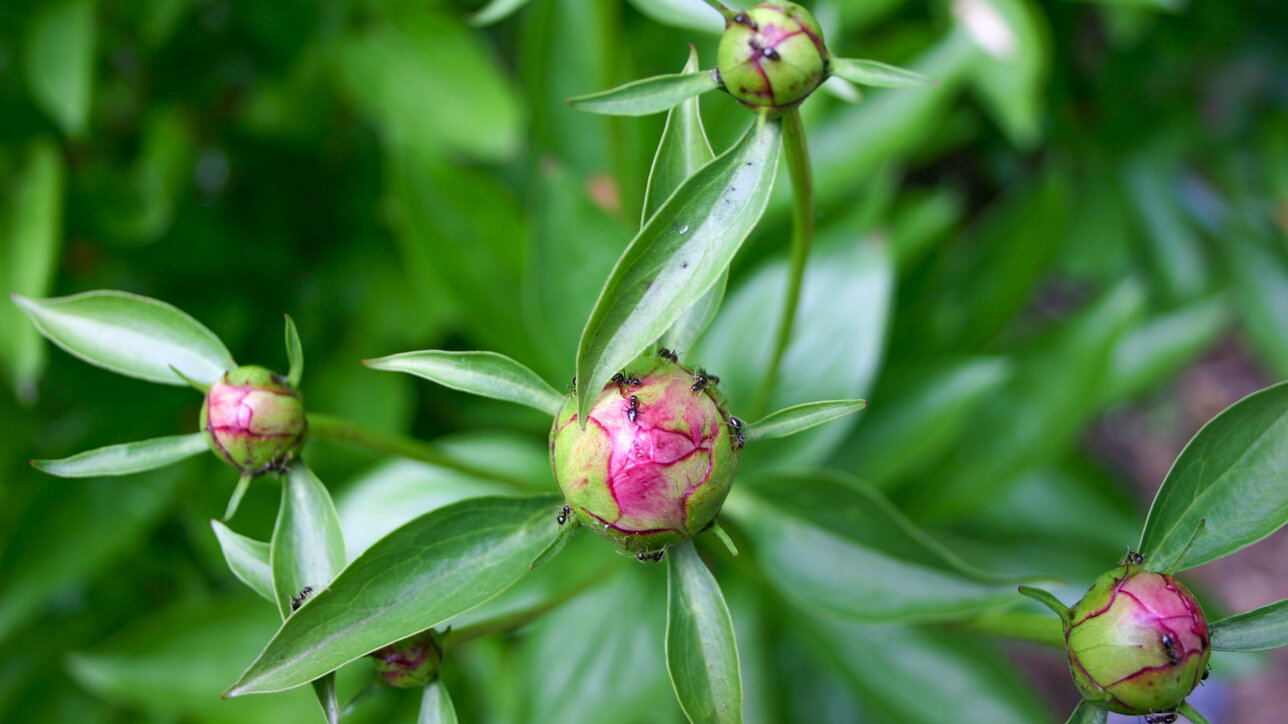
If you are worried about ants when bringing cut flowers into the house, simply cut the flowers when the buds are still closed, making it easy to shake off the ants. Also, if you cut your flowers in the early morning or evening, there are often fewer ants on the buds.

Ants and Intersectional Itoh Peonies

How to Save

To preserve your flowers for weeks after their bloom time, simply cut them in the stage stated above and store them in the refrigerator. They can be stored in a vase with water, protected by a flower sleeve, for up to six months if you continually change out the water. They can also be stored in the refrigerator without water, placed on their side, wrapped in newspaper for a few weeks. They will rehydrate when placed in water. Note that the flowers will dehydrate in a frost-free refrigerator; flowers should be stored in an old-fashioned refrigerator or a floral refrigerator. On both methods, watch for any mold or fungus and remove these portions as soon as they are spotted. Note that peonies stored for a long period of time will open faster and not last as long. It takes practice to store peonies successfully, so try it this year and see how long you can keep your peonies.


10. Disease, Insects, and Other Issues

Peonies are very resilient plants that typically thrive and grow without incident. However, every once in a while, a fungus or virus may take hold and impact the health of your peony plants. Although infections generally start in early spring, they often go unnoticed until later in the summer. Left unchecked, these diseases can do real damage to your peonies.

Powdery Mildew - Erysiphales (Fungus)

Intersectional Itoh Peony Powdery Mildew

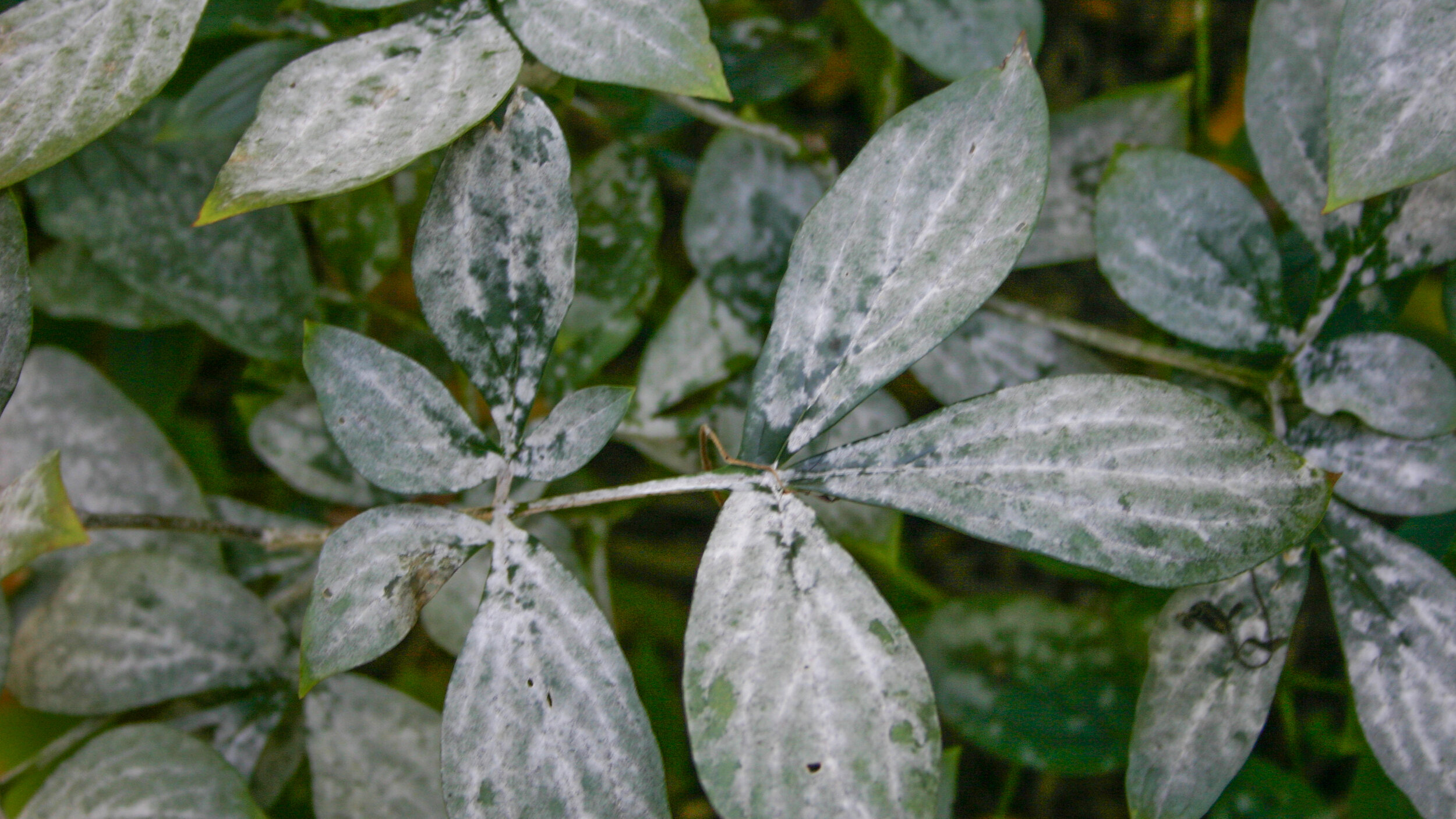
If you are experiencing a white powder-like covering on the leaves of your peony, you have powdery mildew in your garden.

  • SYMPTOMS: Leaves turn white. Onset is in late June through September. It is not fatal, and tree peonies are less prone than herbaceous or intersectional peonies to this fungus. In some years, powdery mildew is worse than in others. It can infect plants when there are hot days, high humidity, and cool nights. Once the plant is infected, there are virtually no sprays or oils that will completely rid the plant of powdery mildew this year. However, there are some preventative remedies to keep your plants from getting powdery mildew in the coming years.
  • TESTING: We encourage you to get your plants tested so you know exactly what you are dealing with. Send a sample to the agricultural university’s plant diagnostic center in your state for laboratory diagnosis and treatment recommendations. At our peony farm, we use:
  • OUTLOOK: Considered more unsightly than harmful in peonies.
  • TREATMENT: Bacillus subtilis to boost plant's natural defenses; neem oil or other horticultural oils after the leaves have formed; baking soda spray (1t baking soda, 1qt. water and a few drops of liquid soap) on the soil in early spring and on the plant itself in the summer; rhubarb leaf tea; cornmeal as a soil amendment; or mixed as a spray; products containing sulfur, or a biofungicide recommended to treat powdery mildew on peonies;. All pesticides should be used according to package directions, and remedies should be tried on portions of the plant prior to making large-scale applications. Another good natural preventative remedy is to regularly spray a solution of 30% milk to 70% water on your plants on sunny days. This helps not only peonies, but all plants susceptible to powdery mildew.
  • PREVENTION: Healthy plants are less susceptible to disease. Peonies require the proper amount of sun, nutritious soil, good air circulation, and the right amount of water. Encourage good air circulation by spacing peonies at least 3 feet apart and by keeping the base of each plant clean and free of weeds. Water only as needed and always in the morning using drip irrigation; do not use overhead irrigation and avoid watering at night. Never plant peonies in low-lying areas where the soil floods. Amend soils prior to planting to ensure good drainage and proper nutrition. Use compost to maintain nutritious soil. Keep a close eye on your peony plants, especially during early spring rains when fungi and viruses begin to take hold.

Botrytis - Botrytis paeoniae (Fungus)

disease_4109.jpg
botrytis Intersectional Itoh Peony
  • SYMPTOMS: Stalks wilt and die, buds turn black. Onset is typically in early spring but can be at any time when temperatures remain below 70 degrees. Botrytis is especially prevalent when the weather is cool, wet, and humid. Botrytis is common and, when seen in your garden, can persist for years through spores in the soil.
  • TESTING: When the cause of a problem is not clear, sending a sample to your state's agricultural university plant diagnostic center is the most reliable way to get answers. A laboratory diagnosis identifies the specific pathogen involved and comes with treatment recommendations grounded in what your plants are actually dealing with rather than general advice. We use:
  • OUTLOOK: Botrytis is easy to treat but can kill peonies and other plants when not treated, so it is especially important to pay attention to signs of the fungus.
  • TREATMENT: At the first sign of disease, remove the affected portions of the plant immediately using clean pruners. Dip the blades into a 10% bleach solution between every cut, or use Clorox wipes as an alternative, to make sure the cutting tool does not carry the problem from one part of the plant to another. Dispose of everything you remove in the trash rather than the compost pile, where disease can survive and spread to other parts of the garden. A more aggressive option would be to use systemic fungicide labeled for use on peonies. The cooperative extension service of New Jersey recommends Ferban and Manebrom. Griffin Greenhouse Supply recommends products including Cease, Daconil, Medallion, and Veranda-O. Follow label instructions carefully and test fungicides on one plant before making large-scale applications. Continue to treat according to the label instructions as the disease persists. There are OMRI-approved fungicides for the treatment of botrytis.
  • PREVENTION: Strong, healthy peonies begin with decisions made before planting, not after problems appear. Selecting a site with full sun, preparing soil for both drainage and fertility, and planning spacing that allows air to move freely through the planting are all preventive measures that reduce disease pressure across the entire growing season. Three feet between plants is the minimum spacing needed for adequate airflow, and the ground around each plant should stay clear of weeds and organic debris that hold moisture against the crown. Water when the plant needs it and not before, always at ground level in the morning using drip irrigation, and never by any method that wets the leaves or runs into the evening hours. Low spots in the garden where rainwater collects are unsuitable for peonies, regardless of any other conditions present. Incorporate compost into the planting bed to establish good soil structure and nutrition from the start, and replenish it over time to maintain fertility. The weeks of early spring, when rain is frequent and temperatures are still cool, are the period when fungal and viral problems are most likely to develop, so monitor plants closely during that window.

Peony Blotch/Red Spot/Measles - Cladosporium paeoniae (Fungus)

Intersectional Itoh Peony Blotch
  • SYMPTOMS: Small circular spots begin to appear in spring just before the plants flower. The spots will increase in size and are not often detected until mid-summer. If left unchecked, spots can eventually cover the whole plant.
  • TESTING: Accurate identification is the first step toward effective treatment, and a laboratory diagnosis removes any uncertainty about what you are seeing. Your state's agricultural university runs a plant diagnostic center that accepts samples from home gardeners and returns confirmed findings along with specific treatment recommendations based on the actual pathogen involved. We recommend:
  • OUTLOOK: Does not immediately kill the plant but successive years of the fungal disease will impact the health of the plant.
  • TREATMENT: When noticed, cut off diseased portions of the plant, dipping the pruners in a 10% solution of bleach (or use Clorox wipes) between each cut to ensure the disease does not spread. Clean up all debris around the plants, and throw all of this matter away - do not compost. Use a fungicide that is intended for Peony Blotch on peonies, apply according to the manufacturer's instructions.
  • PREVENTION: The foundation of disease prevention in peonies is a growing environment that gives the plant everything it needs to stay strong. Full sun, well-prepared soil, careful watering, and room for air to move around each plant reduce the conditions that pathogens depend on to take hold. Plant with at least three feet between each peony, and keep the ground around the base clear of weeds and fallen debris throughout the growing season. Water at the soil level in the morning using drip irrigation, and never use overhead watering or water late in the day when moisture cannot evaporate before nightfall. Choose planting sites carefully and avoid any area where standing water collects after heavy rain. Before planting, work the soil thoroughly to improve both drainage and fertility, and add compost to establish a nutritional base that supports long-term plant health. Once the season gets underway, keep a close watch on foliage during the wet weeks of early spring, when the combination of cool temperatures and consistent moisture gives fungi and viruses their best opportunity to spread.

Phytophthora Blight - Phytophthora cactorum (Fungus)

  • SYMPTOMS: Phytophthora blight is a soil-borne fungus. The stems at the base of the plant will begin to darken and then wilt and die. Leaves may appear drought-stressed. The entire plant may rot, making it easy to pull from the ground. The fungus can survive in the soil for years as long as moist conditions persist. Can be spread by garden tools and contaminated soil. Symptoms are often more evident during periods of low rainfall, making it easy to confuse the onset of this disease with drought.
  • TESTING: Taking the guesswork out of disease identification is always worth the effort. Every state has a plant diagnostic center affiliated with its agricultural university where you can send a sample and receive a confirmed laboratory diagnosis along with treatment recommendations tailored to what your plants are actually facing. We use:
  • OUTLOOK: Phytophthora can kill peonies and other plants.
  • TREATMENT: When noticed, cut off diseased portions of the plant, dipping the pruners in a 10% solution of bleach (or use Clorox wipes) between each cut to ensure the disease does not spread. Clean up all debris around the plants, and throw all of this matter away - do not compost. Rutgers Diagnostic Lab notes that the fungicide Subdue can be used to treat Phytophthora on peonies and apply according to the manufacturer's instructions. Be sure to treat both the plant and the soil. Improve soil drainage and prevent water from pooling near plants.
  • PREVENTION: A peony's ability to resist disease is directly tied to the quality of its growing conditions. Sun exposure, soil fertility, water management, and airflow all play a role, and getting all four right from the start is the most effective disease prevention available. Keep plants spaced at least three feet apart so air moves freely between them, and clear weeds and debris from the base of each plant throughout the season. When watering is necessary, do it at the root level in the morning with drip irrigation and avoid any method that wets the foliage, particularly in the evening. Site selection matters as well: areas where water pools after rain are poor choices for peonies, regardless of how well the soil is otherwise prepared. Work compost into the bed before planting to build fertility and improve drainage, and maintain that organic matter over time to keep the soil in good condition. Pay closest attention to your plants in early spring, when cool, wet weather creates the conditions that fungi and viruses need to establish.

Sclerotinia Rot/Southern Blight (Fungus)

  • SYMPTOMS: Sclerotinia Rot is a soil-borne fungus. Rot begins at the base of the plant with water-soaked stem lesions. Leaves will turn yellow and die. During times of high humidity, a white cotton-like fungus spreads around the base of the plant and the soil. The fungal fruiting bodies appear like small collections of mustard seeds on the ground near the base of the plant. They may eventually form a crust on the soil.
  • TESTING: Before treating any disease, knowing exactly what you are dealing with will produce better results than guessing. Most states have a plant diagnostic center through their agricultural university, and sending a sample there will get you a laboratory diagnosis along with treatment recommendations specific to what your plants are actually showing. We use:
  • OUTLOOK: Sclerotina can kill peonies and other plants.
  • TREATMENT: For sclerotinia rot specifically, the Rutgers Diagnostic Lab recommends Heritage or Headway as effective treatments. Follow the manufacturer's directions precisely and apply to both the plant and the surrounding soil, not the foliage alone. If treatment does not resolve the problem, remove the affected plants along with the soil immediately surrounding them and dispose of everything away from the garden. Do not add diseased material to a compost pile. Sterilize any tools that came into contact with the affected area before using them elsewhere in the garden. Lay clear plastic over the exposed soil and leave it in place for two to three months during the hottest part of summer, allowing heat to build up and address remaining pathogens in the ground. Once that period has passed, improve drainage in the area before doing anything else, then leave the soil fallow for a full season before considering replanting.
  • PREVENTION: Disease resistance in peonies starts with the conditions you create before the plant goes into the ground. Good drainage, nutritious soil, adequate sun, and consistent air movement around each plant are the four factors that determine how well a peony holds up across the growing season. Space plants a minimum of three feet apart to keep air circulating freely through the foliage, and remove weeds and debris from the base of each plant regularly. Water at the root level in the morning using drip irrigation, never overhead, and never in the evening when moisture sits on the foliage overnight. Avoid low-lying areas where water collects after rain, as saturated soil is one of the most common causes of root and crown disease in peonies. Prepare the soil thoroughly before planting by amending for drainage and fertility, and incorporate compost to build long-term nutritional quality. During early spring, when wet weather creates ideal conditions for fungal and viral spread, check plants frequently and address any early signs of trouble before they take hold.

Viral Diseases

Peonies are also susceptible to a small number of viruses, including peony ringspot virus, leaf curl, Le Moine disease, and the mosaic virus. These are rare, difficult to cure, and it is generally recommended to remove infected plants from your garden.

  • SYMPTOMS: Poor growth and stunted growth. Leaves will have a mottled/mosaic appearance. Portions of the leaves can turn yellow and die. Can be spread by insects or tools.
  • TESTING: To ensure an accurate identification of any issues, we highly recommend professional testing. For a precise laboratory diagnosis and specific treatment advice, please submit a sample to your state agricultural university's plant diagnostic center.
  • We recommend and use:
  • OUTLOOK: Viral diseases can kill peonies and other plants. Remove and dispose of infected plants; do not compost.
  • PREVENTION: Vigorous peonies possess a natural resistance to illness. To keep them thriving, provide the necessary balance of sunlight, rich soil, consistent air flow, and appropriate hydration. Maintaining at least 3 feet of space between each plant and keeping the base clear of weeds will significantly improve air circulation. When watering is required, utilize drip irrigation during the morning hours, making sure to avoid both nighttime watering and overhead systems. It is vital to avoid planting in flood-prone, low-lying spots. Before you begin planting, prepare the site by amending the soil to ensure it is both well-draining and nutrient-rich, using compost as a primary amendment. Monitor your peonies closely, particularly as fungi and viruses are most likely to emerge during the wet conditions of early spring.
Intersectional Itoh Peony Bud Blast Dead
 

Bud-Blast

A wide variety of stressors can prevent peony buds from opening. This can include poor soil, immature plants, plants being buried too deeply, excessive mulch, not enough sun, and early spring frosts. Check the depth of your peony and adjust if necessary.

Chafer Beetles

SYMPTOMS: Peony flowers are being eaten. Chafer beetles look similar to Japanese beetles. They can be removed by hand or killed with almost any insecticide. Neem oil is an organic option; read the product label for more detailed instructions. Ants are a natural predator and chase away chafer beetles.

Ants on Peonies

ants_8121.jpg
53b_ants.jpg

We have heard for generations that ants are necessary for peonies to flower. This is only part of the story. Peonies, as noted above, are attacked by chafer beetles, which damage the buds and prevent peonies from flowering. Ants have evolved as the natural predator. Peonies secrete a sweet nectar, ants are fed by this nectar, and in return chase away the chafer beetles. To prevent bringing in ants when you cut your peony flowers, cut them when they are still in bud. This also increases the longevity of your cut flowers, as they open more slowly in the cool of your house than in the heat of the outdoors.

Peonies Not Blooming

Peonies take time to become established. It is normal for a newly planted peony not to bloom the first year or two after planting. Peonies follow the well-known perennial truisms: first year sleep, second year creep, third year leap, or first year roots, second year shoots, third year flowers. They are well worth the wait. If you have old, established peonies that have beautiful green leaves and no flowers, it is often a problem with planting depth. This can be due to several reasons, such as mulching or a shift in the soil in the garden. Peonies are very sensitive to planting depth. If the plant becomes too deep, as it does when mulched, the shoots (called eyes) that form at the top of the root (the crown) do not get their proper "winter chill" and cannot form flower buds. This lack of winter chill is why peonies do not grow in places such as Florida or Southern California. If you have peonies that are not blooming, check the depth of your plant by delicately moving a bit of the soil from the top portion of the plant, being careful not to break off the delicate pink eyes. The top of the root should be from 0.5 to 1.5 inches below the surface of the soil. For details on the exact planting depth for your area, see the Planting section. If you find your peony to be too deep, it will need to be lifted. Transplanting is best done in the fall; moving it in the fall will also ensure that it gets the proper winter chill in the following season. Note that the first year after it is transplanted, it may not bloom as peonies take a year to recover from being transplanted. Don't worry, they are well worth the wait and will last for hundreds of years. Another possibility that should not be ruled out is the amount of sunlight. Over time, surrounding trees and shrubs can shade out your peonies, resulting in fewer and fewer flowers. The more sun you have, the more flowers you will get. If the overall health of your plant is declining, check planting depth, the amount of water, competition of roots, depletion of nutrients in the soil, or note if the area has flooded recently. It may be time to transplant your peony to a new location. Wet soil is a common factor in unhealthy peonies. It is possible to divide your peony when you transplant it by following the instructions below. Plant divided roots in a new section of the garden so the soil in the former location can recover.


11. Transplanting Intersectional Peonies

 If you are lucky enough to have mature peonies in your garden and they are blooming beautifully, first consider leaving them where they are, as peonies will sulk for a year or two after they are transplanted. If transplanting is inevitable, the time to do this is in the fall when the plants are dormant. If you are in a crunch, peonies can be transplanted successfully at other times of the year, but this is not recommended. Before you start digging up your peony, it is important to prepare the new location as mentioned in our Planting Section. If you decide to transplant your intersectional peony in the fall, begin by removing the leaves and stems as you would do in fall cleanup. Do not cut back the main stem. If you want to divide the peony before replanting, count the major stems before digging. Plan ahead and pre-dig your holes-know that for every three to five stems, you can have approximately one new peony. See details on propagating/dividing below. Once this is done, lift your established intersectional peony using a large garden fork and begin at least eight inches from the base of the stem. Work your way around the plant and gently pry it from the ground. The roots are brittle and can easily be broken. Any time peonies are transplanted or divided, they take a few years to return to their previous grandeur.

DSCN1403.JPG
Transplanting Intersectional Itoh Peony

12. Propagating Intersectional Peonies

Propagating by Root Division

DSC01301.jpg
DSC01306.jpg
cut1.jpg
cut2.jpg

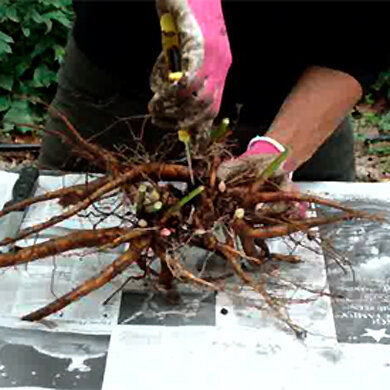
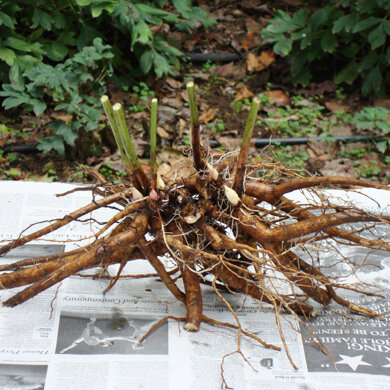
Note: the photos above show an herbaceous peony being divided; while intersectionals are different, the same idea applies. The only way to create more intersectional peonies is to divide them. Root division, and/or grafting in the case of tree peonies, is the only way to create another plant that is identical to its parent plant. The seeds of intersectional peonies are not viable. Peonies do not need to be divided. They can be planted and left in the same location for decades and will do incredibly well as long as they continue to get ample light, have minimal root competition, and the soil has good drainage. Propagation is simply a means to get more peonies. Scroll down for more information on each type of peony. When dividing an intersectional peony, wash the dirt off the roots. The root has four parts: large tuberous roots, small fibrous roots, a connective crown, and eyes at the top of the crown. Rinse off the peony so you can see the plant clearly. Divide the plant into pieces by carefully cutting through the crown. Each piece should have at least one strong tuberous root and 3-5 eyes at the top of the crown. Plant each intersectional peony 3 feet apart, according to the details in the Planting Instructions section.

Explore Our Collection Today

The reward for planting and caring correctly comes in the form of intersectional peonies that return each season with larger blooms and a stronger root system than the year before. Deer-resistant and long-lived once the root system is established, these plants require minimal intervention to perform beautifully across decades. A correctly sited intersectional peony is a generational garden fixture, one that will still be flowering long after the gardener who planted it has moved on to other projects. Every plant we ship arrives bare-root and individually packaged in potting mix, with full cultivar labeling and planting instructions included, ready to go directly into the ground. Our nationwide shipping is timed to plant dormancy for best establishment results, so every order arrives at the right moment in the growing cycle. To add these distinctive, long-blooming plants to your collection, browse our peony roots for sale and find the root divisions that will anchor your garden for years to come. When you are ready to make your selection, buy peonies online with us today.